Quality Inspector

Masonry & Wall
Wall Calculator (2026) – Brick, Block & Masonry Master
Expert Guide

All-in-one masonry tool for standard brickwork, AAC blocks, and stone walls.
⚡ Quick Answer
For a standard 10ft x 10ft Nepal brick wall (9-inch thick), you will need approximately 1,150 bricks and 4 bags of cement. For more professional estimates and BOQs including labor, visit pro.nirmansutra.com.
🛠️ How It Works
- •Select the wall type (Brick / Block / Stone / Parapet / Boundary).
- •Enter the key dimensions for that type.
- •Specify door and window openings for automatic deduction.
- •For boundary walls, enter the pillar spacing to get the pillar count.
- •Choose your preferred mortar ratio or block adhesive type.
- •Apply a wastage % and get final procurement quantities.
📐 Calculation Formula
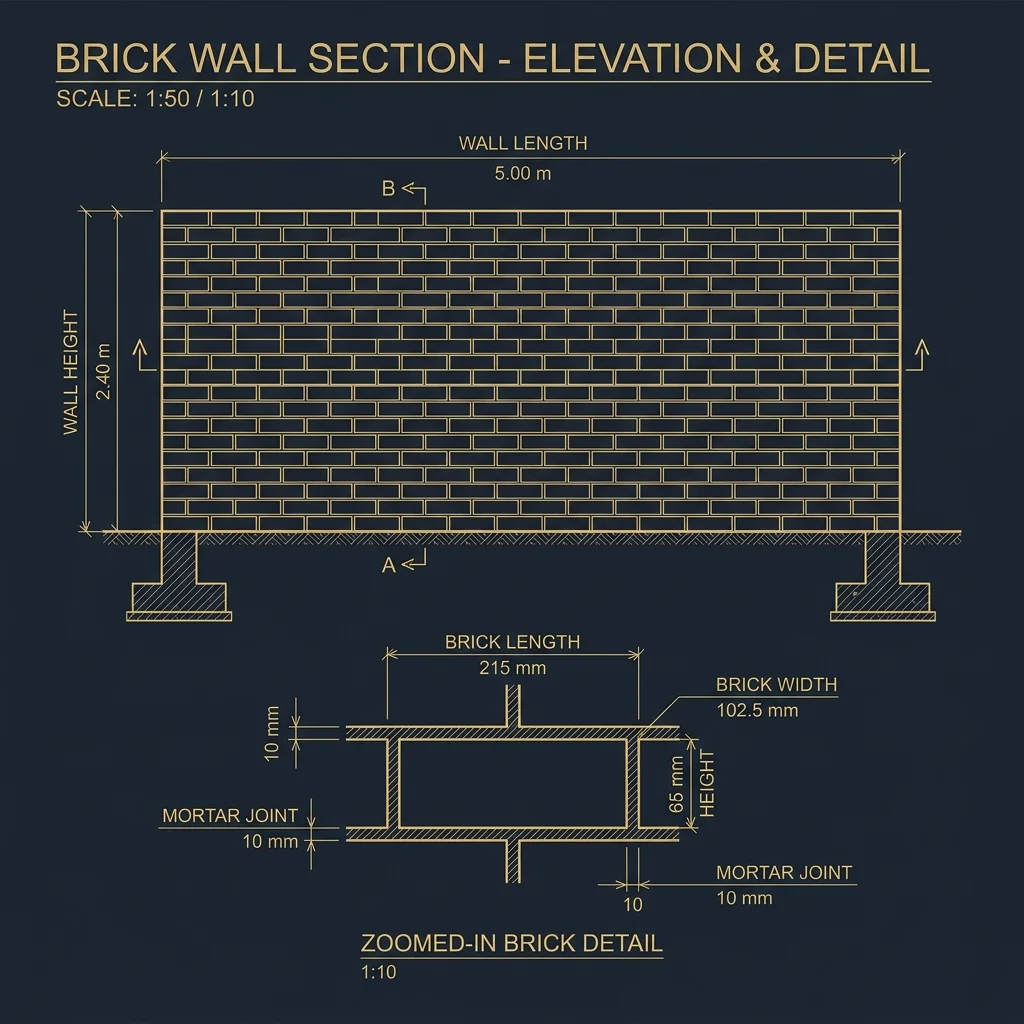
Bricks Count = (Wall Volume / Brick Volume) + Wastage
Mortar Volume = ~30% of Total Wall Volume
Cement Bags = (Mortar Vol / Ratio Sum) × 1.33 × 28.8
📋 Real-Life Example
Example: A wall of 10m length and 3m height (Brick mode).
1. Gross Area = 30 m².
2. Lintel/Sill Deduction (auto) = 178mm height reduction -> Net Height = 2.822m.
3. Net Area = 28.22 m².
4. Wall Volume (@230mm) = 6.49 m³.
5. Brick Count (Nepal) = 6.49 * 510 ≈ 3,310 bricks.
6. Mortar Volume = ~1.95 m³ (dry).
7. Cement (1:6) = 7.5 bags.
⚠️ Common Mistakes to Avoid
- ✕Forgetting to enter door and window areas — this leads to 15–20% over-ordering of bricks and mortar.
- ✕Using standard mortar joints (10mm) for AAC blocks — AAC needs thin-bed adhesive (3–5mm only) which is much cheaper.
- ✕Not adding 5–10% wastage factor for site breakage and cutting at the top of the wall.
- ✕Not deducting pillar widths from the gross length for boundary walls, causing an over-count of bricks.
🔍People Also Search / यो Calculator मा अक्सर खोजिने कुराहरू
Brick count calculator Nepal 2026
1m3 brick calculation with mortar
Brick price in Kathmandu per thousand
AAC block vs red brick cost Nepal
Interlocking brick calculation for boundary wall
Garo ma itta garne tarika
1000 square feet ghar ma kati itta lagcha
Standard brick size in India and Nepal
Lintel and sill deduction rule
Cement sand ratio for load bearing wall
१ वर्गमिटरमा कति ईंटा लाग्छ?
Wall calculation near me construction
❓ Frequently Asked Questions
For a standard 9-inch (230mm) wall using Nepal bricks, you need approximately 110–115 bricks per square meter, including mortar joints.
A ratio of 1:6 (Cement:Sand) is recommended for normal walls. For load-bearing or basement walls, use a richer 1:4 ratio for better strength.
Yes, our tool automatically deducts ~7 inches (178mm) of wall height to account for concrete sills and lintels commonly used in Nepal/India seismic construction.
For standard 600×200mm AAC blocks, you only need about 8.3 blocks per square meter, significantly faster than traditional bricks.
Stop Guessing.
Start Building.
- ✕Square Feetको भ्रममा नफस्नुहोस्।(Don't get trapped in "Square Feet" rate illusions.)
- ✓Save up to 11% on materials with an accurate BOQ.
Worth NRs. 5,000
NRs. 999 🎯
Get Expert EstimateLimited Time Launch Price